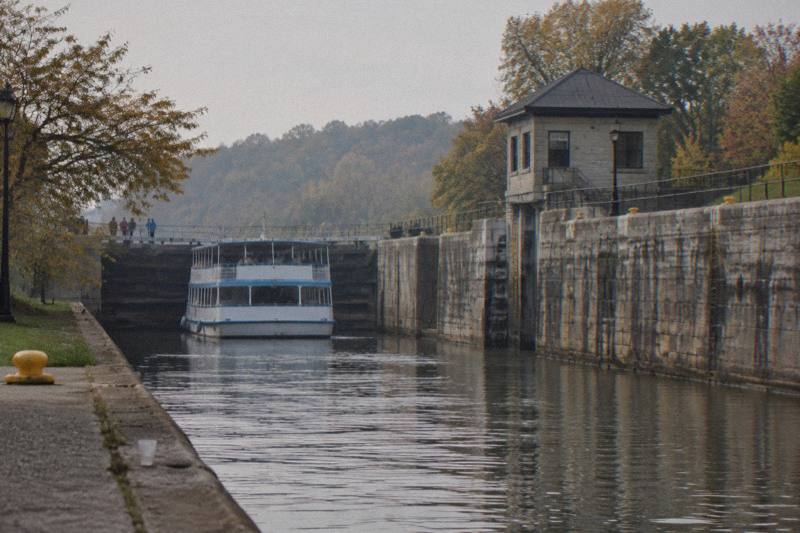
Do You Have To Pay To Go Through The Locks On The Erie Canal?
No, recreational boaters pay no tolls or lock fees on the Erie Canal in 2026. Here is what lock passage actually costs, and how cruise fares and charter rates cover it.
Do You Have To Pay To Go Through The Locks On The Erie Canal?
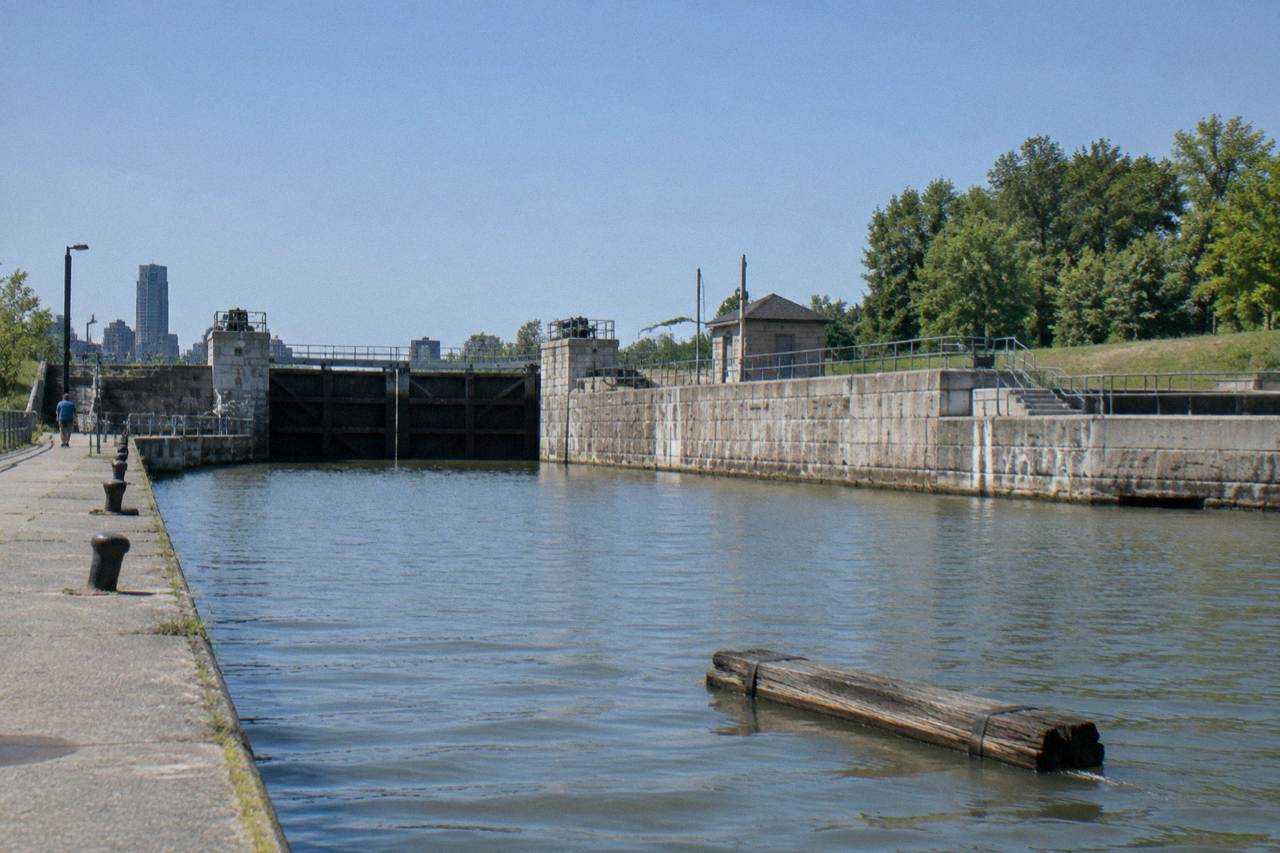
No, you do not. The New York State Canal System charged no tolls and no lock fees for recreational use in 2026, and the Canal Corporation's boating hours page states this plainly. A private boat, a kayak or a rented canal boat locks through at no charge. The only money that changes hands is the fare you pay a cruise operator or the charter rate you pay a rental company, and that covers far more than the lock itself.
The question sounds simple, and the answer is simple, but the confusion behind it is real. Canals elsewhere in the world do charge. Boaters on French waterways buy a vignette, a permit sticker, before they can use a lock. On the Erie Canal, the equivalent cost is zero. The official boating hours and tolls page for the 2026 season, which ran from Friday, May 15 to Wednesday, October 14, lists no tolls or fees for recreational use anywhere on the system.
That policy covers all 57 locks on the New York State Canal System, 35 of which sit on the Erie Canal itself, according to the Erie Canalway National Heritage Corridor's locks overview page. It does not matter whether you are in a 41-foot charter boat at Lock E-32 in Pittsford or a canoe at a small guard gate: the lockage is free. What the lockmaster asks for is communication and patience, not payment.
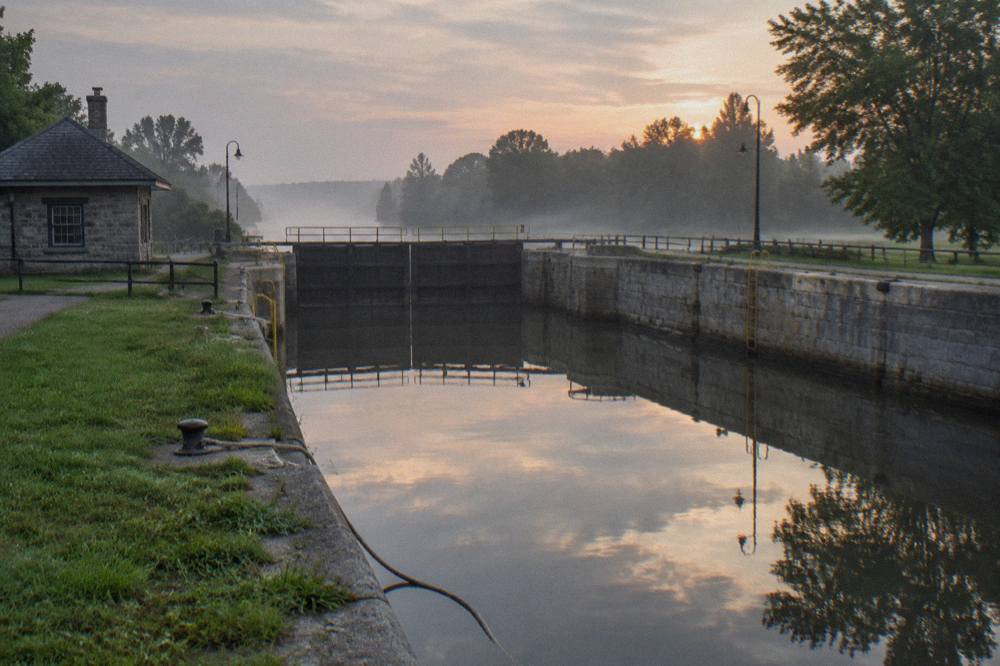
There is a second question hiding inside the first, and it is the one most visitors are really asking: if the locks are free, why does a lock cruise cost money? The answer is that you are not paying for the lock. You are paying for the boat, the crew, the narration and the operator's season. The lock is the free part. Everything else is a business.
If your plan is to see the locks work rather than to pilot anything yourself, the three listings below cover the main ways to do it: a narrated cruise through the famous Lockport double locks, a Mohawk Valley lock cruise, and a self-skippered charter where you run the lock lines yourself.
What A Cruise Fare Actually Covers
A cruise fare buys a seat on a commercial boat, and the lock passage inside that fare costs the passenger nothing extra. The operator charges the fare, not the lock. Lockport's two-hour double locks cruise runs from $26 per adult, the Herkimer 90-minute Lock 18 cruise from $29, and no listing on this roster adds a lock fee, a toll or a surcharge at the gate. The lock itself remains free to everyone.
The distinction matters because people sometimes assume a lock cruise carries a premium, that the operator pays the state for each lockage and passes it on. Nothing in the Canal Corporation's published rules supports that. The fare you pay at the dock covers the operator's real costs: the vessel, insurance, crew wages, fuel, docking and the months of the season when the boat cannot run at all. Lockport Locks & Erie Canal Cruises sailed its 2026 public season from May 11 to October 16, with daily departures at 12:30 and 3:00 pm and a shoulder-season schedule at reduced frequency. That whole calendar is what your $26 funds. If you're still weighing whether the canal justifies the trip at all, the honest verdict on the Erie Canal as a sightseeing stop sorts out who it rewards and who should drive past.
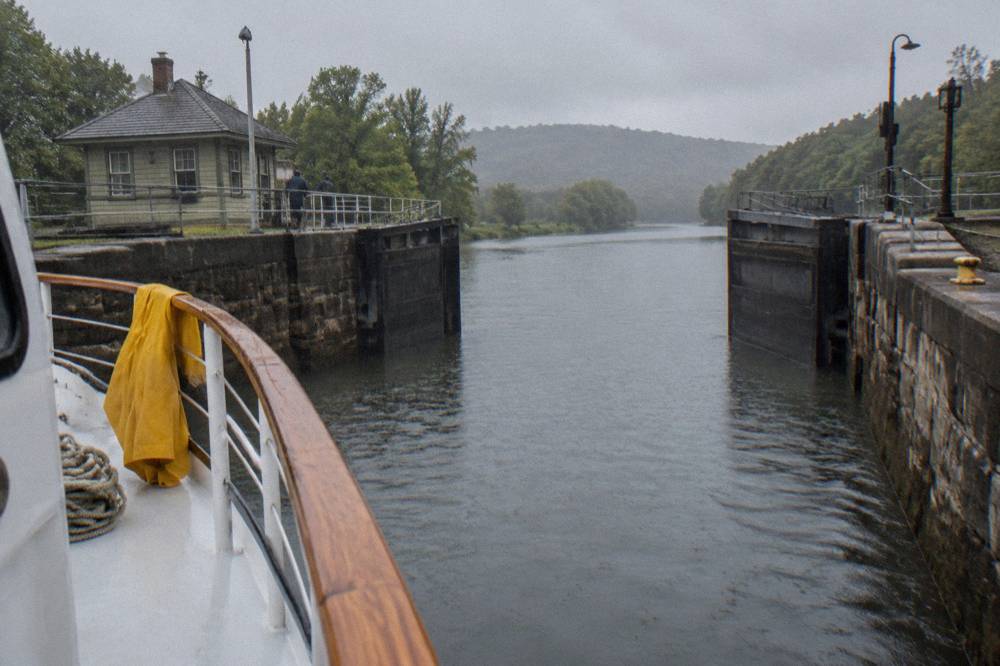
The Lockport cruise deserves a special note here because it is the one product on this roster built entirely around the lock itself. The boat passes through Locks 34 and 35, the double set the operator calls the only one of its kind on the Erie Canal, lifting the vessel a combined 49.1 feet per the official guidebook. The operator's own page rounds that to 50 feet. Either way, passengers get two full lockages in about two hours, and the fare is the from-price of $26 per adult, with children 4 to 10 at $12.50 and under 4 free. AAA and CAA members pay $24.50. The listing carries a Tripadvisor-scope rating of 4.8 across 865 reviews, one of the two deepest review pools on this site's roster. If Lockport sounds like the right fit, our guide to where you can watch Erie Canal locks in action covers that double lock plus a few other standout viewing spots.
For a comparison, the 90-minute Lock 18 cruise out of Herkimer runs from $29 per adult, children 4 to 12 at $20, and the boat is weather-protected, so it runs rain or shine. Its rating is 4.8 across 1,633 reviews on the same operator-scope basis. Neither fare contains a line item for the lock, because there is no line item to contain.
| What you pay for | Who you pay | Typical 2026 cost | Does the lock itself cost anything |
|---|---|---|---|
| Private boat lockage | Nobody | $0, no tolls or fees for recreational use | No, free |
| Kayak or canoe lockage | Nobody | $0 | No, free |
| Lockport double locks cruise, about 2 hours | The cruise operator | From $26 per adult | No, included in the fare |
| Herkimer Lock 18 cruise, 90 minutes | The cruise operator | From $29 per adult | No, included in the fare |
| Self-skippered charter, 3 nights | The charter operator | From $2,770 per private boat | No, included in the charter rate |
If you are weighing which lock experience suits you, the guide to which cruises go through a lock breaks the whole roster down by lock passage, including the listings that pass through no lock at all. That last point matters: a cruise that never enters a lock costs roughly the same as one that does, which tells you the lock was never the priced part of the ticket.
Locking Through On A Charter Boat: Free Locks, Priced Everything Else
A rental charter folds every operating cost into one rate, and the locks inside that rate are free. Erie Canal Adventures' 34-foot Lockmaster starts at $2,770 per private boat for three nights, and the operator states the rate includes fuel, tolls, orientation and training, cleaning, linen and full equipment. The tolls line is belt and braces: there were no tolls to collect in 2026 anyway. New York sales tax is added at booking.
The charter price looks nothing like a cruise fare, and it should not. You are renting a house that moves, for days at a time, and the operator hands you the keys after an orientation session that trains you to run the boat, tie off in a lock chamber and work the lock lines. The 2026 season stayed open for reservations until the canals closed to boats after October 14, with arrivals by 12:30 pm and returns by 9 am. The base sits at 1125 Marina Parkway in Macedon, between Rochester and Syracuse, which puts Lock E-32 and the Fairport lift bridge within an easy first day's run.
The "tolls" inclusion in the charter rate is worth pausing on, because it is a small window into how canal costs really work. Operators list tolls in their rate descriptions as a matter of habit, a leftover from the way canal pricing is described generally. In practice, the Canal Corporation collected nothing from recreational users in 2026. What the charter rate genuinely covers is fuel, which is a real and variable cost, plus the training time, the cleaning between charters and the equipment aboard.
Erie Canal Adventures is the renamed Mid-Lakes Navigation, the operator's business having transferred in 2019, and its operator-scope rating stands at 4.9 across 36 reviews, a thin sample worth stating as a thin sample. The larger boats cost more: the 41 and 42 foot Lockmasters share one rate from $3,299 for three nights, and The Harriet, with a queen bed, a larger bathroom and a sitting parlor, starts at $3,399 for three nights. Four and seven night options exist for each. None of those rates contains a lock fee, because no lock on the system charges one.
For boaters bringing their own vessel, the practical costs are the ones around the lock, not the lock itself: a marina slip for the night, fuel, and the time to travel. The canal boat rental guide walks through the charter options in detail, including what the orientation covers and what to provision before you arrive.
Why The Locks Are Free: A Short History Of Canal Tolls
The Erie Canal has not always been free, but the fees that existed were commercial charges, never a per-lock toll for a small boat. The original 1825 canal cost $7,143,789 to build, and the state recovered that through tolls on freight, not on lockages. Recreational use of today's Canal System carries no tolls or fees, a policy the Canal Corporation restates each season on its official pages.
The money story of the canal starts in 1817, when the New York legislature authorized a $7 million, 363-mile, 40-foot wide waterway on April 15. Eight years later, in 1825, the Seneca Chief led the opening flotilla and the Wedding of the Waters ceremony at New York Harbor. Tolls on cargo repaid the construction debt, and the tollhouse system persisted for decades as the canal's revenue engine. That history is why the word "toll" still clings to canal talk, and why the question this article answers comes up so often.
Today's canal is a different waterway: 338 miles from Waterford to Lake Erie, 12 to 23 feet deep, 120 to 200 feet wide, with locks 310 feet long, per the Heritage Corridor's fast-facts and canal-today pages. The freight that once paid the bills largely left for the railroads and the highways. What remains is a recreational and heritage corridor, established by Congress in 2000, spanning 524 miles and 23 counties. Charging a family in a pontoon boat a per-lock fee to float through that heritage would cost more to administer than it would raise, and the state's position is that it does not. For the full picture on the waterway's reach, our guide to the Erie Canal's length and locks covers the climb from Albany to Buffalo.
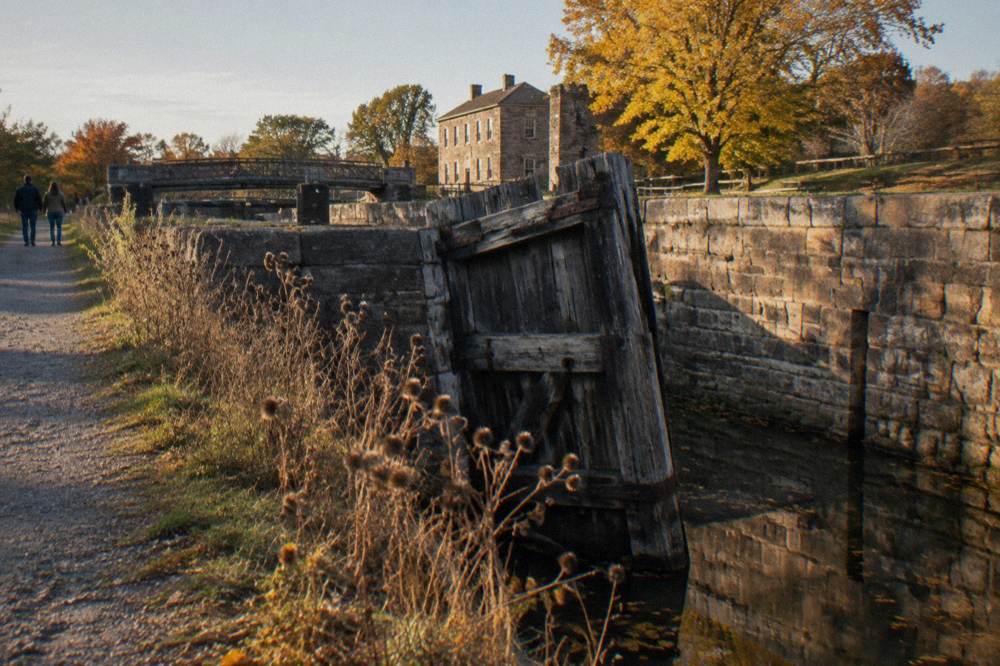
The free-lockage policy has a practical edge that first-time boaters appreciate: it removes every transaction from the lock itself. You do not fumble for change on a moving boat, you do not queue at a kiosk, and you do not keep receipts. The lock hours, not lock fees, are the constraint that actually shapes a canal trip. If you want the mechanics of how a lockage actually works, the guide to how the locks still operate covers the cycle from approach to exit.
One planning note for anyone extending a trip toward Waterford: the Canal Corporation's notices ask boaters heading for the Waterford Flight to arrive by 5 p.m. to make the full flight. That is a time rule, not a fee rule, and it is the kind of thing the free lockage makes easy to forget.
The Real Costs Of A Lock Trip, Beyond The Fare
The lock is free, the cruise fare or charter rate is fixed, and the costs that actually vary are the ones around the water: getting to the dock, eating, and timing your visit inside the season. No cruise on this roster lists hotel pickup, so guests drive to the dock, and every operator's address is published. The variable part of the budget is the day around the cruise, not the lockage.
Start with the season, because it bounds everything else. The 2026 navigation season ran May 15 to October 14, and the cruise operators sat slightly differently inside it: Lockport sailed May 11 to October 16, Herkimer May 22 to October 12, Colonial Belle in Fairport May 15 to October 30, and the Sam Patch in Pittsford generally May to October with no printed 2026 dates. Weather and water levels can change any sailing, so the standing advice is to check the operator's page before you drive.
Then the dock. Lockport's boat leaves from the Flight of Five at 210 Market Street. Herkimer's departs from Gems Along the Mohawk at 800 Mohawk Street, across from Thruway Exit 30. The Sam Patch dock sits at 12 Schoen Place in Pittsford village, and Colonial Belle boards at Packett's Landing in Fairport. None of these is far from parking, but none offers a shuttle, a train or a bus, so a car or a bike is part of the plan. For drive planning, check a mapping service from your starting point, since this site does not publish drive times.
Food is the last variable. Lockport's boat has a snack area only, no meal. Herkimer sells snacks for cash. The Sam Patch sells drinks and snacks aboard, and its Lock 32 lunch cruise exists precisely to fold a meal into the ticket, at from $53 per adult, a $30 cruise ticket plus a $23 optional lunch. Colonial Belle's listings carry lunch and dinner packages on select days. None of that is a lock cost; it is lunch.
| Cost item | Who charges it | 2026 figure or range | Notes |
|---|---|---|---|
| Lock passage, any boat | Nobody | $0 | No tolls or fees for recreational use |
| Lockport cruise ticket | Lockport Locks & Erie Canal Cruises | From $26 per adult | Children 4 to 10 $12.50, under 4 free |
| Herkimer cruise ticket | Erie Canal Cruises | From $29 per adult | Children 4 to 12 $20, military $27 |
| Sam Patch Lock 32 cruise | Rochester By Water | From $30 per adult | Lunch version from $53 |
| Charter, 3 nights, 34-foot | Erie Canal Adventures | From $2,770 per private boat | Includes fuel, tolls, training, cleaning, linen |
| Getting to the dock | You | Check a mapping service | No cruise lists hotel pickup |
The pattern across that table is consistent: the lock line is always zero, and everything with a number on it is a service with a boat, a crew or a bed attached. That is the whole answer to the money question, and it is why the Erie Canal remains one of the least expensive historic waterways in the world to actually use. This site, Erie Canal Boat Tours, keeps the full roster and fare comparison in one place for exactly this kind of planning.
If you are leaning toward the Herkimer option, the only canal cruise in the Mohawk Valley on this roster, its live listing carries the day's departure times and availability.
Common Questions About Erie Canal Lock Fees
Do You Have To Pay To Go Through The Locks On The Erie Canal?
No. The Canal Corporation charged no tolls and no fees for recreational use of the canal system in 2026, and that covers every lockage by a private boat, a kayak or a charter. The only payment involved in a lock trip is the fare a cruise operator charges or the rate a charter company charges, and neither adds a lock fee on top.
Do cruise passengers pay a lock fee on top of the ticket?
No. The operator charges the fare, not the lock. Lockport's double locks cruise runs from $26 per adult and the Herkimer Lock 18 cruise from $29, and neither listing adds a surcharge for the lock passage. The lock itself is free to every vessel on the system.
Do charter boats pay tolls on the Erie Canal?
The charter rate from Erie Canal Adventures states that it includes fuel, tolls, orientation and training, cleaning, linen and full equipment, starting at $2,770 per private boat for three nights on the 34-foot Lockmaster. In practice the Canal Corporation collected no recreational tolls in 2026, so the tolls line is an inclusion of a cost that was zero. New York sales tax is added at booking.
When can you go through the locks for free?
Within lock hours and the navigation season. The 2026 season ran May 15 to October 14, with standard lock hours of 8 a.m. to 6 p.m. daily and extended 8 a.m. to 9 p.m. hours at select locks, including the Lockport and Pittsford locks, in peak season. Outside those hours the locks simply do not operate, free or otherwise.
Was the Erie Canal always free to use?
No. The state recovered the original $7,143,789 construction cost through tolls on freight after the canal opened in 1825, and tollhouses operated along the route for decades. Those were commercial cargo charges, not per-lock fees for small boats, and today's recreational policy charges nothing.