How Deep Is The Erie Canal Now?
The Erie Canal today runs 12 to 23 feet deep and 120 to 200 feet wide, against 4 feet and 40 feet in 1825. Here is what changed, and what the depth means for boats and cruises.
The Erie Canal that opened in 1825 was a ditch you could almost wade across: 4 feet deep, 40 feet wide, with 90-foot locks. The canal on the map today is a different body of water entirely. The modern channel runs 12 to 23 feet deep and 120 to 200 feet wide, its locks stretch 310 feet long, and the whole engineered system carries commercial barges, cabin cruisers, rented canal boats and sightseeing cruises that would have run aground in the original prism. The change was not gradual drift. It was a deliberate rebuild, twice over, driven by freight economics, and it is the single biggest reason the canal still floats traffic two hundred years after the Wedding of the Waters.
How Deep Is The Erie Canal Now?
The Erie Canal today is 12 to 23 feet deep and 120 to 200 feet wide, according to the Erie Canalway National Heritage Corridor's published figures, with modern locks 310 feet long. That compares with 4 feet deep, 40 feet wide and 90-foot locks in 1825. The channel also shortened from 363 original miles to 338 miles, Waterford to Lake Erie.
Those numbers come from the Heritage Corridor's fast-facts and canal-today pages, which are the standard reference for the modern dimensions. The depth is a range rather than a single figure because the canal is not one uniform trench. Some sections, particularly the river segments the modern barge canal adopted, hold more water than the dug prism sections. The canalized Mohawk River between Rome and the Capital Region, for instance, behaves like a slow river, and river reaches tend toward the deeper end of that 12-to-23-foot band.
The width range works the same way. The classic dug channel was built to a consistent width, but the Barge Canal rebuild, the third enlargement of the canal, let engineers route whole sections through existing rivers and lakes rather than excavating new prism. Where the canal uses a natural water body, the width opens up toward that 200-foot figure. Where it follows the excavated line, it hugs the lower end.
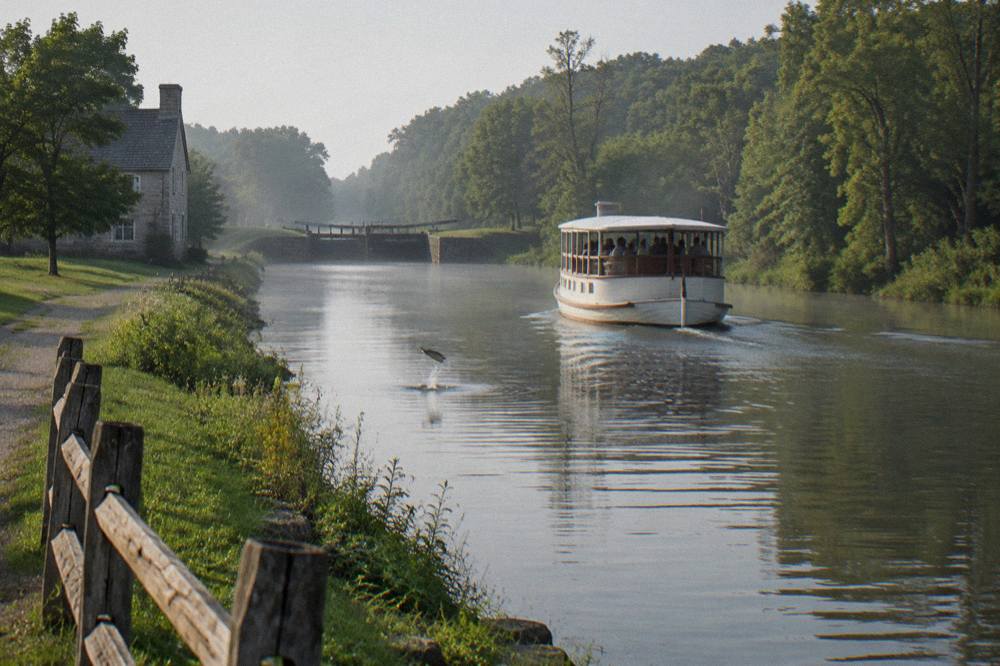
For anyone planning time on the water, the practical takeaway is that depth is not a constraint for recreational boats. A rented canal boat, a pontoon cruiser or a sightseeing vessel draws a fraction of the available water. The constraints that actually shape a canal trip are lock schedules, bridge clearances and the navigation season, which in 2026 runs from May 15 to October 14 per the Canal Corporation's posted hours.
If you want to see the modern channel from the water rather than read about it, these three cruises each run on the deepened barge canal:
The featured option, the 2-Hour Lockport Double Locks Cruise, runs from $26 per adult and passes through Locks 34 and 35, the double set the operator describes as the only such pair on the Erie Canal. It is one of the two most-reviewed cruises on this site, holding a Tripadvisor-scope rating of 4.8 across 865 reviews.
How The Canal Got So Much Deeper
The canal reached its current depth through successive enlargements, culminating in the Barge Canal rebuild, which replaced the dug prism with a deeper channel that reuses rivers and lakes. Each rebuild traded the old dimensions for bigger ones so the canal could carry bigger freight boats.
The original canal, authorized April 15, 1817, was built for boats that carried about 30 tons. Its 4-foot depth and 40-foot width set a hard ceiling on hull size. The state enlarged the canal twice before the final rebuild, deepening and widening the prism each time, because freight kept outgrowing the channel. The last of those enlargements produced the version most people picture when they imagine "the old Erie Canal," with its stone locks and towpath.
Then freight traffic collapsed anyway, lost to the railroads, and the state responded with a much more radical plan. The Barge Canal project abandoned most of the old line entirely. Instead of digging a deeper ditch along the same route, engineers canalized the Mohawk River, raised dam levels on existing water bodies and connected them with new deep cuts. The result is the system still in use: 338 miles from Waterford to Lake Erie, 35 locks on the Erie itself, 57 across the whole New York State Canal System, and a channel sized for 2,000-ton barges rather than mule-drawn packet boats (see Canal Length).
The original canal cost $7,143,789 and took eight years to build, starting in Rome in 1817. That figure, preserved on the Canal Corporation's own history pages, is worth holding next to the modern dimensions: the entire 1825 system cost less than a single modern lock replacement project, and it was built to move boats that would fit inside a modern lock chamber with room to spare.
Here is the then-versus-now picture in one table:
| Dimension | 1825 canal | Modern canal |
|---|---|---|
| Depth | 4 ft | 12 to 23 ft |
| Width | 40 ft | 120 to 200 ft |
| Lock length | 90 ft | 310 ft |
| Route length | 363 miles | 338 miles, Waterford to Lake Erie |
| Locks | 83 in 1825 | 35 on the Erie, 57 system-wide |
| Elevation handled | 571 ft, Albany to Buffalo | 571 ft, unchanged |
One nuance the table hides: the number of locks fell even as the elevation change stayed identical, because the Barge Canal consolidated lifts into fewer, much taller structures. Lockport's combined Locks 34 and 35 lift boats 49.1 feet per the official guidebook, a figure the local operator rounds to 50 in its own marketing. That single pair does the work of five of the old Flight of Five locks, two of which, the restored 1849 Locks 69 and 70, still stand beside the modern channel as museum pieces.
What The Depth Means For Boats And Cruises
The modern depth means essentially any pleasure craft fits, and the real planning limits are elsewhere: lock hours, bridge clearance, the October 14 season close and each operator's own schedule. Recreational boats draw far less than the channel's 12-foot minimum, and cruise operators run purpose-built vessels sized for the 310-foot locks.
Depth matters commercially because it sets barge capacity, and the 12-foot-plus channel is what allows commercial traffic to use the canal at all. For a recreational reader the depth question is mostly theoretical. A typical rented canal boat draws around 3 feet. A pontoon sightseeing boat draws less. Even the deeper-hulled cruise vessels on this canal sit nowhere near the bottom of the channel. The 1825 canal's 4-foot prism, by contrast, genuinely constrained everything: packet boats were built shallow and flat-bottomed specifically because of it. Other pages covering the same trip are gathered on Erie Canal Boat Tours.
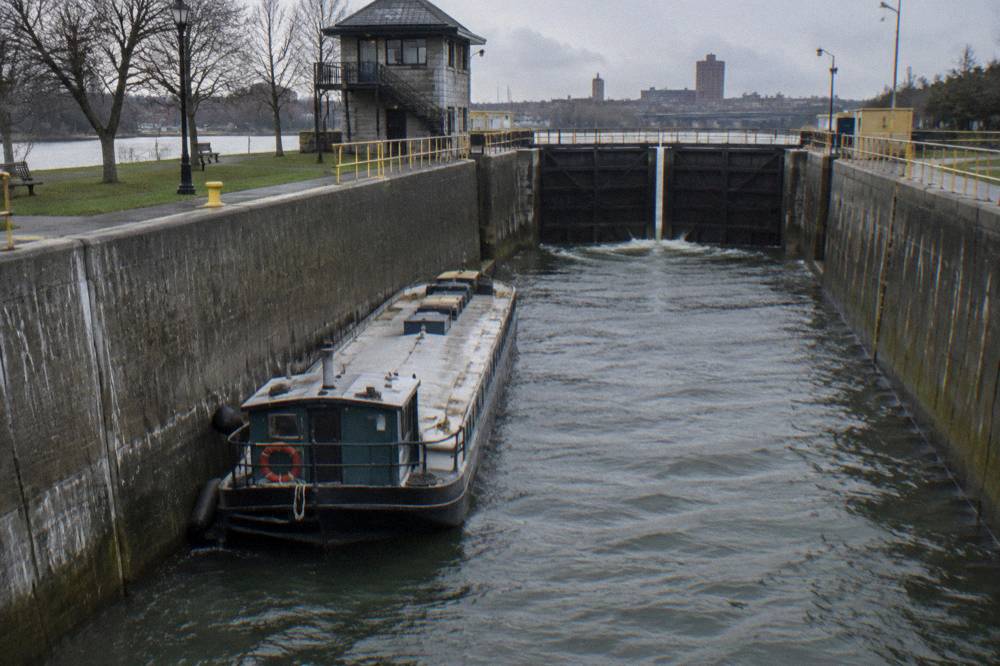
What the deep channel does change is the experience of locking through. The 310-foot chambers are big enough that a 90-minute cruise boat fits alongside other traffic, and the lock walls rise well above the waterline, which is why a lock passage is the signature moment of most cruises. The Heritage Corridor's guidebook records the Lockport pair lifting boats 49.1 feet, and the sensation of that rise, water pouring, gates swinging, is what passengers remember. You can read more about the mechanics in the guide to Erie Canal locks explained.
The lock schedule is the practical constraint worth planning around. Standard lock hours in 2026 are 8 a.m. to 6 p.m. daily, with extended 8 a.m. to 9 p.m. hours at select locations through the peak season, including the Lockport locks and the Pittsford and Fairport reaches, per the Canal Corporation's boating hours page. Cruise operators build their departures around those windows, which is why afternoon departures dominate the schedules.
Wondering whether the featured Lockport cruise fits your dates? The operator runs daily 12:30 and 3:00 pm departures through the 2026 season, with a 10:00 am sailing added daily from June 23 to September 6 and on Saturdays in spring and fall, and booking goes straight to the operator.
For a different read on the same deep channel, the 90-Minute Pittsford Lock 32 Cruise runs through a working lock from $30 per adult, rated 4.4 across 180 reviews on the shared Sam Patch listing.
The Mohawk Valley offers its own version: the 90-minute Lock 18 cruise out of Herkimer, from $29 per adult aboard a weather-protected vessel that sails rain or shine, rated 4.8 across 1,633 reviews. It is the only canal cruise in the Mohawk Valley on this site's roster, and it runs the riverized stretch of the canal where the depth range opens toward its upper end.
How Wide And Long The Canal Is Today
The modern Erie Canal stretches 338 miles from Waterford to Lake Erie, with a channel 120 to 200 feet wide, and the full New York State Canal System adds the Champlain, Oswego and Cayuga-Seneca branches. The width is what allows two-way commercial traffic and gives cruise boats room to maneuver.
The 338-mile figure surprises people who remember the "363 miles" of the original canal from school. The route got shorter, not longer, because the Barge Canal builders cut corners literally: following the Mohawk River and Oneida Lake instead of the old dug line eliminated dozens of miles of winding prism. The shortened, deepened route also removed the need for 48 of the original 83 locks.
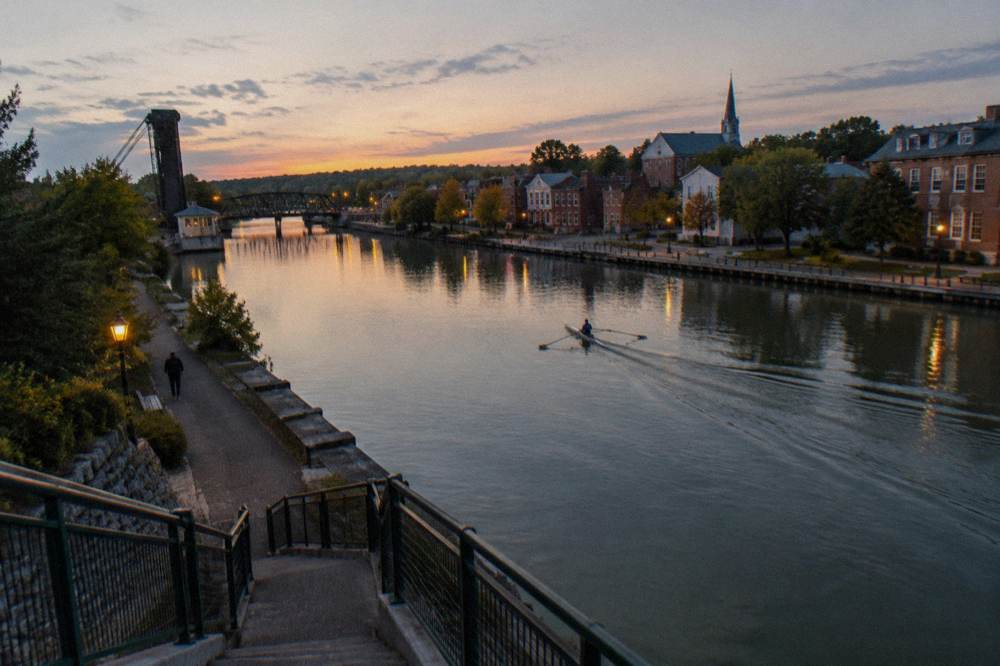
Width changes the character of a visit more than depth does. A 40-foot channel put the water right at the towpath's edge; walkers on the old towpath could talk to boat crews. A 200-foot channel creates open water with real wave action on windy days, room for anchored fishing boats, and enough surface area that the canal reads as a river in many towns. Fairport, Pittsford and Lockport all sit on wide reaches where the canal is the town's front yard.
The depth and width figures come from the Heritage Corridor's fast-facts page, and the season and lock-hours data from the Canal Corporation's boating hours page. Both are primary sources worth bookmarking if you are planning your own time afloat, since the Canal Corporation also posts the current canal alerts that flag temporary lock closures and lift-bridge repairs.
If a cruise is the goal rather than a private boat, the question of where to go is answered by scenery and locks, not depth: every cruise on this site runs water deep enough that grounding is never the concern. For help choosing, the cruises that go through a lock guide sorts the options by what you actually pass through.
Do The Locks Still Work At Modern Depth?
Yes, the locks work and the canal carries traffic every season. The 2026 navigation season is the 202nd consecutive year of operation, running May 15 to October 14, and recreational use carries no tolls or fees. Locks keep standard hours of 8 a.m. to 6 p.m., extended to 9 p.m. at select locations in peak season.
The system's continued operation is the quiet headline behind the depth question. A canal this old, this deep and this wide does not run itself: the Canal Corporation staffs the locks, posts weekly notices to mariners and maintains the alert feed. The 2026 alert pages show the normal rhythm of a working waterway, short-term lock closures for repair, lift-bridge fixes and event notices, with no system-wide stoppage.
For boaters, the depth figures translate into a simple operational reality: the channel was engineered for 2,000-ton barges, and everything smaller uses a fraction of it. Locks are free to transit for recreational boats. Cruise passengers never think about depth at all, they think about lock chambers, and the 310-foot modern locks are the reason a sightseeing boat can drop into a chamber at Lockport, rise or fall 49.1 feet in one pair, and come out the other side into the wide reach above.
Planning around the season matters more than any dimension. Locks stop turning after mid-October, the canals close to boats after October 14 in 2026, and individual cruise operators set their own windows inside that: Lockport sails to October 16, Colonial Belle to October 30 on its Fairport reach, and the Herkimer cruise to October 12. Check the operator page for the dates you want, since schedules tighten in the shoulder weeks.
Whether you go deep into the history or just want an afternoon on the water, these are the three cruises that best show off the modern canal's scale:
Common Questions About Erie Canal Depth
How Deep Is The Erie Canal Now?
The Erie Canal today is 12 to 23 feet deep and 120 to 200 feet wide, with modern locks 310 feet long. The original 1825 canal was 4 feet deep and 40 feet wide with 90-foot locks. The modern route runs 338 miles from Waterford to Lake Erie.
Is the Erie Canal deeper than it was originally?
Yes, roughly three to six times deeper. The 1825 canal held 4 feet of water. Successive enlargements and the Barge Canal rebuild produced today's 12 to 23 foot channel, sized for commercial barges rather than mule-drawn packet boats.
Why does the depth vary between 12 and 23 feet?
The modern canal is not one uniform trench. Sections that follow canalized rivers and natural water bodies, such as the Mohawk River reaches, hold more water, while the excavated prism sections sit nearer the 12-foot end of the range.
Does the canal's depth limit what boats can use it?
Not for recreational purposes. Cruise vessels and rented canal boats draw only a few feet, far less than the channel's minimum. The real limits are lock hours, bridge clearances and the navigation season, which runs May 15 to October 14 in 2026.
How wide is the Erie Canal today?
The channel runs 120 to 200 feet wide, against 40 feet in 1825. The wider reaches are typically where the canal uses rivers or open basins, and towns like Fairport and Pittsford sit on those wide sections.
Do you have to pay to use the locks?
No. There are no tolls or fees for recreational use of the New York State Canal System in 2026, and lock transits are free. Sightseeing cruises charge their own ticket prices, from $26 per adult at Lockport.